


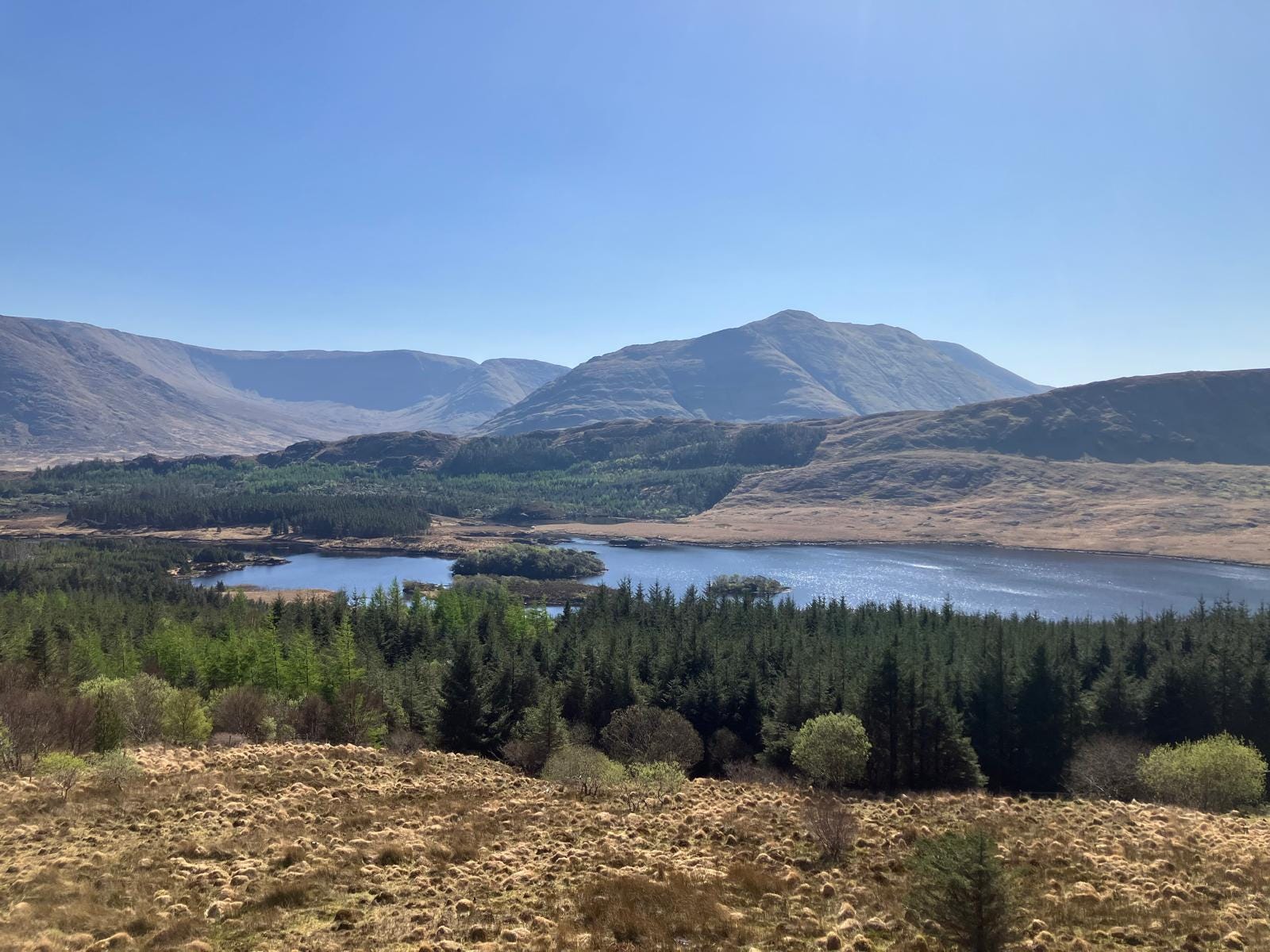
I’ve been relatively quiet for the last week because my wife and I took a spring break to Ireland’s majestic West Coast and the “Wild Atlantic Way”. The older I get, the less interest I have in visiting farther, less known regions of the world, and I decided a few years ago to focus on what has always been on my doorstep. Technically, the Irish Republic is “abroad” but in reality, it isn’t abroad like France or Bosnia, and those countries are not abroad in the sense that Japan, Nigeria or Brazil are. Besides France, I’ve never visited any of those places, and it is very doubtful that I ever will, and I have no issue with that. Yet, I do regret that I have not seen the Welsh valleys, Scotland’s Northern coastline, the Isle of Man, and, until recently, Ireland.
According to my DNA test, I’m 100% of Great Britain and Ireland, with 30% Welsh, 28% Irish, 10% Northern Irish and Scottish, 7% Northumbrian, and the rest a mix of places around England, primarily the North. Long before I took the test, I had been fascinated by and drawn toward the periphery of the British Isles, or to be mildly politically correct, the archipelago of islands off the coast of continental Europe north of France.
Yet, regardless of these blood and soil yearnings, there’s an element of the bucket list about it. One thinks of Douglas Adams’s book Last Chance To See, in which Adams traverses the globe seeking out creatures destined for extinction. Such sentiment can be viewed as unnecessarily doomerish or pessimistic, but few would argue that the feeling of places is at least threatened. Naturally, I would think that much more than that was threatened.
If the United Kingdom had been reduced to the “You-Kay” would Ireland have become Aye-Lan? The processes of de-territorialisation weigh down upon us like The Great Nothing in Wolfgang Petersen’s NeverEnding Story. There are not only suffocating demographic changes but also the hollowing out of spaces that once denoted solidness, identity, and validation of Being. I think of the endless and largely futile hours of fishing I’ve spent by Blyth and Whitley Bay; ultimately, the draw was simply to be where I truly belonged.

De-territorialisation has resulted in people searching out meaning or the transcendent outside of formal institutions precisely because those institutions were hijacked and reconfigured to uproot and dispossess. Within this context, the landscape itself becomes a signifier, a symbol of permanence and grounding. For me, Hadrian’s Wall, the North Sea, and tributaries to the River Tyne occupy such space. It may not be precisely spiritual, but it comes close enough in the metaphysical wasteland of postmodernity and late Globalism. We’ve become numb to the churches being reconfigured to spread leftism, but we view the felling of the Sycamore Gap Tree as an act of heresy and blasphemy.
A Small Country With A Big Landscape
The world is full of magic things, patiently waiting for our senses to grow sharper. William Butler Yeats
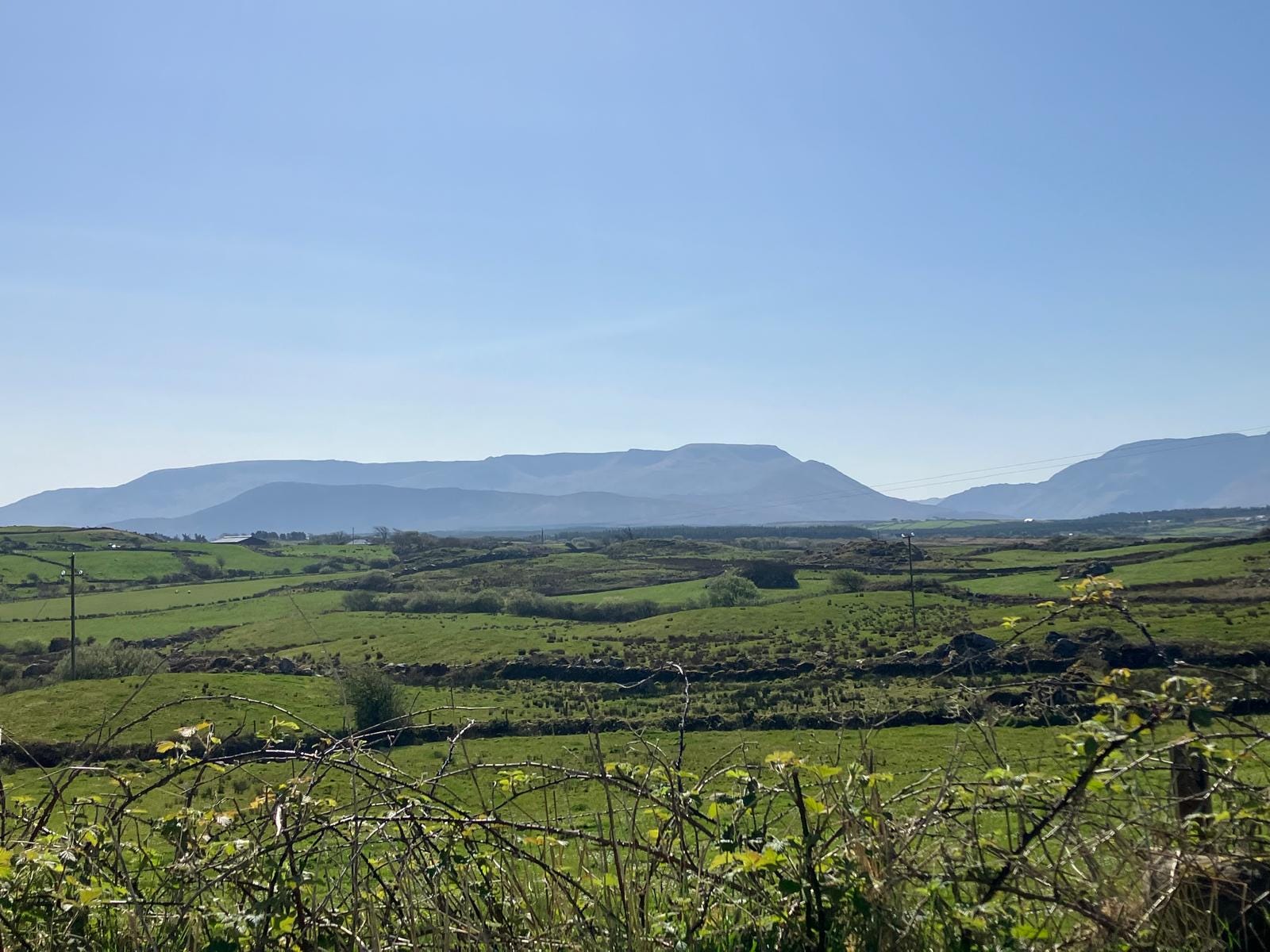
Journeying from East to West across Ireland’s gently rolling hills and boggy centre toward Connemara, one notices how sparsely populated Ireland remains relative to England. The weather blessed us with an unusual glare of spring sun and warmth that dissipated the ubiquitous mist and fog. Once in County Galway, the clear weather allowed a glimpse of the distant, rapidly approaching mountains as the journey continued. Being more familiar with Northumberland and the Cheviots as a frame of reference, Connemara startles and imposes itself upon you, whereas the hills of the English border country creep up on you gradually. Connemara juts and struts in the distance, as if it’s too big for the landscape, like ancient giants that have invited themselves to a picnic of fairies, elves, and leprechauns.
The Lovecraftian aura remains as the ant-like traveller enters the labyrinthine intricacy in which valleys fold into lochs that drift into cul-de-sacs of glacially crafted raw rock. An aloof timelessness emanates from the grand monuments of prehistory, which, in a typical Lovecraftian manner, are entirely indifferent to your existence. Small pockets of houses, utterly dominated by the vastness of the landscape, serve as reminders of the fleeting lot of the residents, and, for that matter, of us all. Every corner spoils you with a new vista of grand lochs featuring islands, bare-faced granite surfaces, and delicate waterfalls trickling like tears under old stony bridges. It is easily among the most majestically sublime places I have ever been.
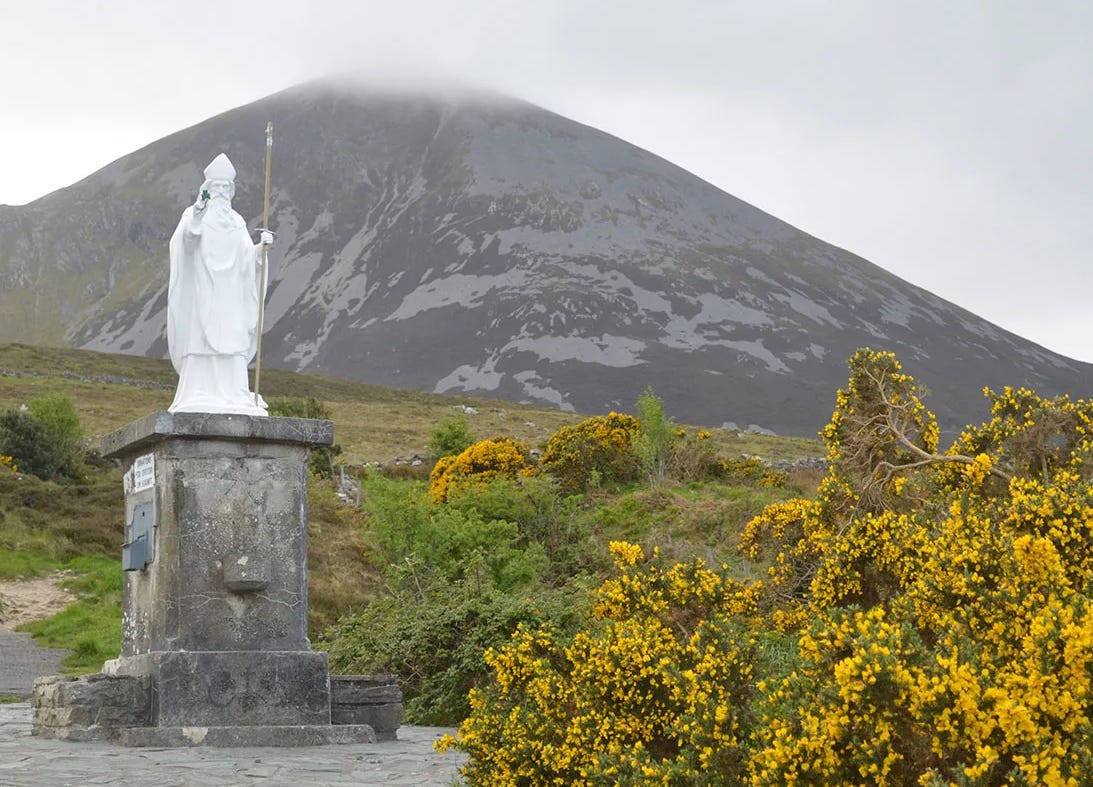
Heading from Leenaun toward Clare Island, you pass an odd, pyramid-shaped mountain known as Croagh Patrick. A waitress told me that St Patrick is alleged to have stayed atop the pointed mountain for forty days, where he was harassed by various demonic entities, including a female serpent he banished.
“If you believe that sort of thing,” she said.
“Oh, I do!” I replied, in quiet rebellion against everything being deconstructed and disenchanted.
Connemara seems surprisingly “untouched” and commercialised. Of course, I was keenly aware that I was but a tourist, yet the grandeur of the scenery and sprawling landscape did not make me feel like part of an endless procession of human cattle profanely trampling upon the place, hunting for the next selfie. Still, heading out to the farther reaches of the coastline facing Clare Island, I became conscious of how the locals could be irritated by outsiders using their homes as backdrops for social media posts.
During my trip across North East England last summer during the riots, I pondered at quiet areas such as Alnmouth, which, despite the doom and gloom about the country’s state, seemed oblivious to the sense of existential emergency felt by so many of us. Does the remaining white population in Birmingham view those hunkered down in native enclaves as fortunate? Do they think about them at all?
Like England, rural Ireland has been no stranger to the government in Dublin dumping immigrants in remote, supposedly “safe” parts of the country. Then again, with housing so sparsely peppered and the communities so remote, one has to wonder how that would be achieved in this part of the world. Regardless, my impression was that the enrichment had been spared for now.